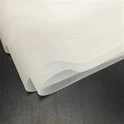
Biaxially oriented polypropylene film
This entry is reviewed by the "Science China" Science Encyclopedia entry compilation and application work project.
Biaxially oriented polypropylene film (BOPP) is generally a multi-layer co-extruded film, which is made by co-extrusion of polypropylene particles to form a sheet, and then stretched in both vertical and horizontal directions. Due to the orientation of the stretched molecules, the film has good physical stability, mechanical strength, air tightness, high transparency and gloss, toughness and wear resistance, and is a widely used printing film with a thickness of 20-40 μm. , The most widely used is 20 μm. The main disadvantage of biaxially oriented polypropylene film is poor heat sealability, so it is generally used as the outer film of composite film. For example, the moisture resistance, transparency, strength, stiffness and printability of the composite film are ideal after being composited with polyethylene film. It is suitable for Contain dry food. Because the surface of the biaxially oriented polypropylene film is non-polar, the crystallinity is high, and the surface free energy is low. Therefore, its printing performance is poor, and its adhesion to ink and adhesive is poor. It needs to be surfaced before printing and lamination. deal with.
Features
Biaxially oriented polypropylene film [1] has the advantages of light weight, non-toxic, odorless, moisture-proof, high mechanical strength, good dimensional stability, good printing performance, and good transparency. It has the advantages of high transparency, good gloss, good barrier properties, high impact strength and low temperature resistance. The disadvantage is that the film shrinks easily during heat sealing (except for the heat shrinkable smoke film using its heat shrinkage performance). Its overall performance is better than moisture-proof
Cellophane, polyethylene (PE) film, PET film. BOPP film also has excellent printing effects. The representative physical property data are: haze<1.5%; gloss>85%; tensile strength (longitudinal/transverse)>120/200MPa; elongation at break (longitudinal/transverse)<180%/65%; modulus of elasticity It is 1700~2500Mpa; the embrittlement temperature is -50℃.
Disadvantages: The elongation is lower than that of PP, the heat-sealing performance is poor, it is not easy to seal when used independently, and it is generally combined with PE and other films with good heat-sealability when used.
Advantages: high tensile strength, good barrier performance, and high transparency.
Due to the molecular orientation, the crystallinity is improved, the tensile strength, impact strength, rigidity, toughness, moisture resistance, and transparency are all improved, and the cold resistance of the film is also improved.
Has good gas barrier and moisture resistance
High transparency, good gloss, good printability
It is non-toxic, odorless and tasteless, and can be directly used in occasions where it comes into contact with food and medicine.