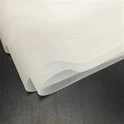
PE (polyethylene) sheets are regarded as key materials in the plastics industry. They are widely used in many industries such as packaging, construction, and agriculture. It has excellent mechanical properties, good electrical insulation, chemical resistance, and aging resistance. Due to its excellent performance and processing capabilities, it has become the preferred product of many manufacturers. At present, many domestic companies have begun to turn their attention to this emerging material and actively introduce advanced technologies to improve their production capacity. However, in the process of producing PE sheets, problems such as uneven color and surface roughness are often encountered. These problems not only affect the appearance of the product, but also may reduce its performance and market competitiveness. At the same time, due to its own properties, when compounded with other materials, there will be different degrees of peeling, resulting in the product failing to achieve the expected effect. Therefore, in order to improve the product quality of PE sheets, solving these problems is particularly critical.
Analysis of the main reasons for uneven color of PE sheets
Raw material factors
Uneven dispersion of pigments is one of the key factors causing inconsistent color of PE sheets. By testing and analyzing pigments of different formulations, it is found that the amount of dispersant, the type and method of adding stabilizers, and the amount of additives added will have a significant impact on the dispersibility of the pigment. The distribution of pigments in the raw materials will directly determine the color consistency of the final product. In addition, the color difference between raw material batches is also a key factor leading to uneven color. Therefore, to ensure product quality, each batch of raw materials must be accurately tested and the formula adjusted. Different batches of raw materials may differ in color and dispersibility, which requires strict quality control throughout the production process.
Formulation factors
The inappropriate proportion of pigments in the formula is also one of the factors causing color inconsistency. The particle size and particle shape of the pigment directly affect its dispersibility and tinting power. The amount, type and proportion of pigments will affect the color performance of the final product. In addition, without a suitable dispersant or stabilizer, the distribution of pigments during the manufacturing process may be uneven, which may have an adverse effect on color uniformity.
Processing factors
During the processing process, factors such as temperature and mixing uniformity may affect the color consistency of PE sheets. Whether the processing temperature is too high or too low, it may trigger chemical or physical changes in the pigment, which will affect its color. In addition, uneven mixing will also cause uneven distribution of pigments in the raw materials, which will affect the color effect of the final product.
Storage and environmental factors
Long-term storage may cause the color of PE sheets to deteriorate. External environmental conditions such as light and humidity may also have a certain impact on the color. Therefore, during the storage and transportation stages of the items, it is necessary to implement appropriate protection measures to reduce the adverse effects of environmental variables on the color.
Optimize the PE sheet formula to reduce color unevenness
In order to solve the problem of uneven color of PE sheets, you can start with optimizing the formula.
Pigment selection
Selecting pigments with good dispersibility and high stability is the core link in the process of formula optimization. Different types of pigments have different physical and chemical properties and surface chemical properties. Reasonable matching and use of them can effectively improve product performance. High-quality pigments can ensure that the raw materials are evenly distributed during processing, thereby avoiding the problem of uneven color.
Formula Adjustment
By fine-tuning the pigment ratio in the formula, we can ensure the balance of color distribution. When the pigment content varies within a certain range, its performance shows different degrees of change. On this basis, adding appropriate dispersants and stabilizers can enhance the dispersion and stability of the pigment, thereby reducing the uneven color.
Formula Verification
After optimizing the formula, it is necessary to confirm its effectiveness through laboratory testing. This article introduces an experimental method for testing formulas, which is to compare the formulas produced by different manufacturers with the standard formula, find out the differences between the two, and formulate corresponding improvement measures based on the results. During the testing phase, we can simulate the real production environment, conduct multiple rounds of experiments and fine-tuning on the formula to ensure the stability and reliability of the formula.
factors affecting the surface roughness of PE sheets during processing
In addition to uneven color, the surface roughness of PE sheets is also an important factor affecting its quality. The following factors may affect the surface roughness of PE sheets during processing:
Design of molds
The surface roughness of PE sheets is directly affected by the surface roughness and temperature control of the mold. The study found that when the mold surface temperature is lower than the melting point of the material, there is a nonlinear relationship between the surface temperature and the surface roughness of the product. If the surface roughness of the mold is too high, the surface of the product may be scratched or uneven; if the mold surface temperature is too high, the thermomechanical properties of the material will be seriously reduced, causing the product to warp and deform. If the temperature management of the mold is not appropriate, defects such as weld lines and shrinkage marks may appear on the surface of the product.
Processing conditions
Processing conditions such as injection speed, pressure and temperature will also affect the surface roughness of PE sheets. Too fast injection speed may cause spray marks on the surface of the product; insufficient injection pressure may cause the product to be incompletely filled; and too high temperature may cause problems such as burning or deformation on the surface of the product.
Raw material state
The surface roughness of PE sheets is largely affected by the raw material melt index and temperature stability. As the melt index and ambient temperature in the raw material increase, the surface quality of the product decreases. During processing, raw materials with unstable melt index may produce flow marks or ripples on the surface of the product; raw materials with poor temperature stability are prone to shrinkage, cracking and warping, which will reduce the surface quality of the product. If the impurities and moisture content in the raw materials are too high, defects such as pores and cracks may appear on the surface of the product.
Reduce the surface roughness of PE sheets by improving mold design and processing conditions
In order to reduce the surface roughness of PE sheets, we can start with improving mold design and adjusting processing conditions.
Mold design optimization
By using high-precision mold making technology, we can ensure that the mold surface has good smoothness and finish, which helps to reduce scratches and unevenness that may appear on the product surface. In addition, by optimizing the mold cavity structure, we can reduce the resistance to flow, enhance the uniformity of product filling, and further reduce its surface roughness.
Processing condition adjustment
Through the fine control of processing conditions such as injection speed, pressure and temperature, it is possible to ensure that the product achieves excellent surface quality throughout the entire processing process. This article introduces the effects of several common molding processes on the surface quality of plastic products. Through the appropriate injection rate and pressure settings, it can be ensured that the final product is not only filled fully, but also the surface remains smooth; through proper temperature management, we can prevent undesirable phenomena such as burning or deformation on the product surface.
Raw material pretreatment
By drying the raw materials, the internal moisture and impurities can be effectively removed, thereby enhancing the melting degree and temperature stability of the raw materials. Adding a certain amount of lubricant to the melt index stable raw materials can reduce the friction loss of the product and effectively prevent the oxidation of the material. The use of raw materials with a stable melt index can ensure that the product has good fluidity and filling properties during processing, thereby reducing the surface roughness.
Quality control measures in practice
In order to ensure the quality stability of PE sheets, a series of quality control measures need to be taken.
Raw material inspection
In order to ensure the quality stability of raw materials, it is crucial to perform performance tests on each batch of raw materials in terms of color, melt index, etc. During the raw material production process, the raw materials need to be tested and analyzed regularly or irregularly to ensure the stability of the raw materials and the consistency of the quality of the finished products. After a series of tests, we can promptly identify the quality defects in the raw materials and implement appropriate corrective plans accordingly.
Process monitoring
Real-time monitoring of core parameters such as temperature and pressure during processing helps to ensure the stability and controllability of the entire processing process. The use of virtual instrument technology can realize online monitoring of process parameters, thereby improving production efficiency. At the same time, regular maintenance and care of the mold can not only extend its service life, but also reduce the occurrence of surface defects of the product.
Finished product inspection
In order to ensure the quality stability of the product, it is crucial to detect the color consistency and surface roughness of the finished product. In the production process, it is necessary to select appropriate methods for inspection according to the characteristics of different products. By inspecting the products, we can promptly identify the quality defects in them, and conduct in-depth tracking and analysis of substandard products, and then determine the root cause of the problem and implement corresponding corrective measures.
In summary, the key to solving the problems of uneven color and surface roughness of PE sheets is to optimize the formula, improve the mold design and adjust the processing conditions. At the same time, the implementation of strict quality management measures is also a key factor in ensuring the continuous stability of product quality. Only in this way can we produce high-quality, high-value and market-competitive products. Through continuous improvement and innovation, we have the ability to continuously improve the product quality of PE sheets to meet market needs and win the trust and support of customers.