


Global Plastic Film Market continues to expand. According to industry report, the global plastic film market size will exceed USD100 billion in 2023 at a compound annual growth rate 5.2%. Polypropylene (PP) and polyethylene PE (polyethylene) films occupy the central position in packaging, agriculture and industry because of their low cost and stable properties. However, huge differences in physical properties, chemical stability and processing technology often lead companies to a material selection dilemmas: is polypropylene necessary for high-temperature applications? Is PE the only option for cryogenic applications? The differential value of polypropylene (PP) and polyethylene (PE) films will be systematically analyzed from three aspects: performance comparison, application scenario adaptation and future development trends.
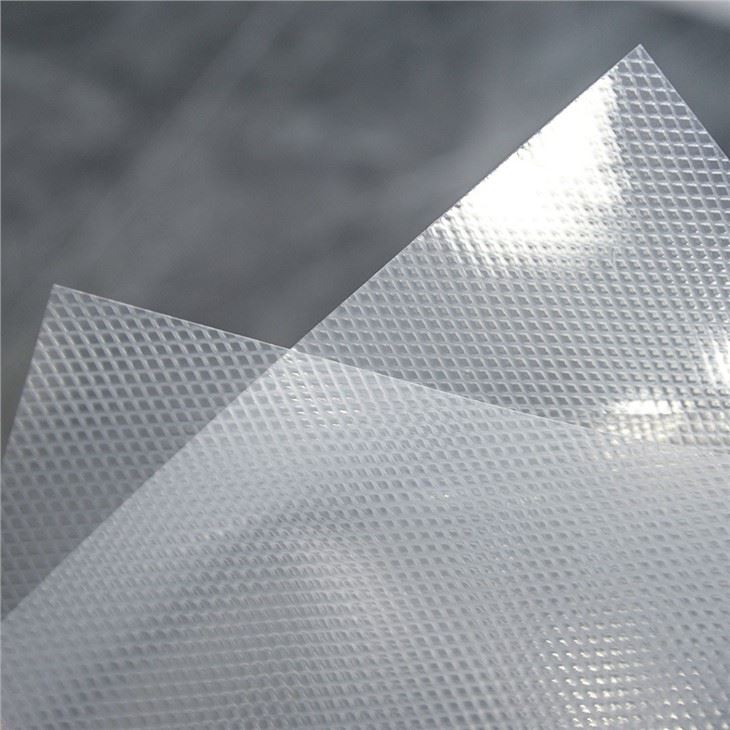
Basic Physical Properties: The Game of Hardness, Temperature Resistance and Transparency
Hardness and flexibility: Balancing Puncture Resistance and flexibility
Polypropylene film has a higher crystallinity than polyethylene film, and its wearability can reach 20 times that of pure polypropylene (after mixing and toughening). It is usually used in scenarios that require high carrying capacity, such as logistics working tanks and industrial pipelines. However, the polypropylene film is prone to white spots when folded (a phenomenon observed in tear tests), limiting its application, which requires repeated bending. Instead, polyethylene films have superior flexibility: (high-density polyethylene HDPE) has an elongation rate more than 30%, (low-density polyethylene LDPE) can withstand thousands of bends without breaking, and is the preferred option for rice bags, straw packaging, and other similar applications. For example, the introduction of HDPE film in a branded rice bags resulted in a 40% reduction in breakage and an extension of service life to more than 3 years.
Heat tolerance: the ultimate challenge of high and low temperatures
Polypropylene (PP) films have excellent temperature resistance, can withstand 120°C in the long run and 140°C in short run, and are widely used in retort packaging (such as self-heating fondue), microwave-heated food packaging and medical sterilization applications (121°C steam sterilization). On the other hand, polyethylene films perform exceptionally well in low temperature applications: HDPE remains flexible at -40°C, and LDPE dominates the frozen food food packaging market a low-temperature embrittlement point as low as -70° C. For example, the introduction of PE film pallets by a cold-chain company resulted in a 60 60% in the breakage rate of goods handled in a -25°C cold storage. Transparency versus Gloss: the trade-off between clear display Matte Protection
Polypropylene films are translucent and milky white, but biaxially oriented polypropylene films can achieve more over 90% light transmittance and possess high barrier properties, often used in high-end food packaging such as potato chip bags. In polyethylene films, LDPE has a high degree of transparency and is suitable for situations where visible content is required vegetable preservation); HDPE is a matte translucent film due to its higher crystallinity and is more suitable for situations where light protection is required (e.g. pharmaceutical packaging).
Chemical Stability and Safety: Options for Food Exposure and Medical Scenarios
Chemical Corrosion Resistance: Strong Acids, Alkalis and Organic Solvents
Polypropylene film has strong acid-base corrosion resistance and can be exposed to corrosive substances such as hydrochloric acid and sodium hydroxide for a long time. Polyethylene films, although resistant to weak acids and bases, tend to expand and deform when exposed to aromatic hydrocarbons (e.g. benzene) or chlorinated hydrocarbons (e.g. carbon tetrachloride), limiting their application in the chemical industry. Experimental data shows that the migration rate of polypropylene membrane in contact with edible oil was 0.5-2 times higher than that of polypropylene membrane, further highlighting the chemical stability advantage of polypropylene membrane.
Food exposure safety: the boundary between high temperature safety Low-Temperature Limitations
The percentage of polypropylene film products FDA Drug Administration 92%, which conforms to China's GB4806.1-2016 standard and has become a mainstream material in infant products such as baby bottles, tableware, etc. Its heat resistance allows safe use at 120°C, while PE films may release harmful substances above 80°C, limiting their use to refrigerate applications such as cling film. For example, when a brand's baby bottles were made of PP material, their market share increased to 35% and consumer trust significantly increased.
Medical grade applications: differences in Sterilization Standards and Chemical Compatibility
Polypropylene film is widely used in the packaging of medical devices such as syringes and infusion bags due to its high temperature sterilization resistance. Polypropylene film is also widely used in the packaging of medical devices such as pill bottles (such as oral bottles) and infusion tubes (such as infusion tubing) due to its chemical corrosion resistance. Hospital statistics show 99.8 per cent of polypropylene packaged medical devices are sterilised, significantly higher than the 95% of polypropylene packaging.
INTRODUCTION Process Performance and Sustainability: The Triangle of Cost, Efficiency and Environmental Protection
Process Comparison
Polypropylene film processing requires high temperature (170-280°C) and high pressure injection molding with shrinkage rate of 1.8-2.5%. To prevent deformation, precise Precise temperature control is needed to increase equipment costs (for example, injection molding machine pressure require 1.5 times the pressure of PE). PE films have lower processing temperature (105-230°C), better fluidity and higher blow molding efficiency (e.g. film and bottle). Blow-dryer uses 30% less energy than PP. A comparison by a packaging company found that polyethylene film production was 25% higher per unit time than polypropylene, but the polypropylene film has excellent dimensional stability.
Balancing Modification Technology and Costs:
Polypropylene can improve corrosion resistance by 40%% by blending (e.g. 70%% polypropylene + 30% HDPE) while maintaining 85% impact strength, but this increases costs by 10-15%. Polyethylene can increase impact resistance by 30% by adding LLDPE (linear low-density polyethylene), but this increases costs by 15-20%. For example, the introduction of a modified PP turnover boxes by a logistics company resulted in a 28% reduction in annual usage cost and a 50 per cent reduction in its breakage rate.
Sustainability Assessment: the challenge of Degradation Cycles and recovery systems
PP has a natural degradation cycle of 7-10 years and PE has a degradation cycle of more than 200 years. Polypropylene recycling, however, can reduce byproducts by 37% and has a reuse rate rate of 20%. PE biodegradation technology is expensive (3 to5 times more expensive than traditional PE) and most recycling stations refuse to accept soft packaging such as cling film. The EU's Single-Use Plastics Directive explicitly restricts the use of polyethylene film and promotes polypropylene recycling systems (such as the NextLooPP project, which uses artificial intelligence sorting systems to increase polypropylene recycling rates to 85%).


