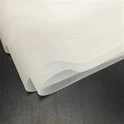
Polypropylene (PP), as one of the five general plastics, has become the core material of automobile lightweight because of its low density, good heat resistance, strong chemical stability and excellent processing performance. In recent years, with the rapid development of new energy vehicles and the increasing strictness of environmental protection regulations, polypropylene sheet metal has achieved a breakthrough in performance through modification technologies, and has been widely used in automotive interior, exterior, structural and functional parts. Based on typical application cases, this paper analyzes the innovative practice and technological development trends of polypropylene sheet metal in automobile industry.
Polypropylene Plates at the Center of Automotive Lightweighting
Automotive lightweighting are a key path to improve fuel efficiency and reduce emissions. Studies have shown that a 10% reduction in curb weight can reduce fuel consumption by 6 percent to 8 percent and emissions by 4% percent for fuel-efficient cars. For an electric car, for every 10kg of weight lost, the range increases by 2.5km. Polypropylene sheets have a density of only 0.89-0.91 g/cm3, which is a significant weight loss compared to traditional metal materials. In addition, with modifications, they balance mechanical performance with functionality, making them the lightweight material of choice for cars.
At present, the amount of modified polypropylene per vehicle has become an important indicator of automobile manufacturing capabilities. The average use of passenger vehicles in Germany is 340-410 kg, with a utilization rate of more than 25%. The average usage of passenger vehicles in China is about 160kg, or 13% cent, and there is a lot of room for improvement. Polypropylene panels have expanded from interiors to exteriors, structural components and even functional components, forming material solutions that cover the entire lifecycle of automotive products.
Innovative Application of PP Plate in Interior and External Exterior Trim of Automobiles
1.Interior: A Comprehensive Upgrades from functionality to comfort.
Instrument Panel Skeletons is core component of the interior of a car and requires to be vibration resistant, shock resistant and heat resistant for a long time. Traditional metal skeletons heavy and expensive, but modified polypropylene sheets balance high rigidity, high high modulus low density through long glass fiber reinforcement (LGFPP) technology. For example, instrument panel skeleton of a vehicle features a 30% long fiberglass reinforced PP material with a a modulus over 4000 MPa, a a notched impact strength over 10 kJ/m2 and a weight of 40% less than that of a metal skeletons, while meeting collision safety requirements.
Door Panel Trim needs to balance impact resistance and surface quality. Polypropylene sheets can be optimized for weight loss and performance by compound toughening with elastomers such as triethylene propylene rubber (EPP), POE and inorganic minerals such as talc. The door plate of a certain model is made of 20% talc-filled + EPDM-toughened PP material, which reduces weight by 35% and has no surface sink marks. In addition, it maintains good toughness at -30°C, effectively resisting stone impacts.
Seat Bases need to withstand human weight and dynamic loads. Modified PP sheets can significantly enhance the bearing capacity by adding fiberglass or carbon fibers. An electric car seat base adopts 20% carbon fiber reinforced PP material, which can reduce weight by 20% compared with traditional nylon material, and meet vibration fatigue test requirements, extending service life to more than 10 years.
2.Exterior Trim: Breakthrough from Structural Support to Aesthetic Design
The bumper is the largest PP component of a car's exterior trim and requires to energy absorption to protect the body during a collision. Whereas traditional bumpers are 4mm thick, modified polypropylene sheets make thin-walled design possible through a high-flow, low-linear expansion coefficient formula. The front bumper of one model features a 13% mineral-filled + elastomer-toughened PP material, which reduces wall thickness to 2.5mm and reduces weight by 50%. In addition, it maintains structural integrity during collision test at 80km/h and reduced maintenance costs by 30%.
Fender Liners need to withstand the impact of soil and stone as well as the aging of ultraviolet light. Polypropylene sheets can be used outdoors for up to 10 years without cracking by adding UV stabilizers and scratch protection. The fender lining of a vehicle is made of PP material with a special formula, with a surface hardness of 2H and a 50% increase in impact resistance. It also supports lacquer-free processes to reduce production costs.
Grid and Decorative Strips need to balance weight and aesthetics. Microcellular foamed polypropylene sheet, through chemical foaming technology, can form uniform micropore inside the product, while maintaining surface gloss sheen, achieve a 10%-20% weight reduction. The front grille of one model is made of microporous foamed polypropylene, which weighs 15% less than solid parts, shortens injection molding cycle by 20%, and greatly improves production efficiency.
Technological Breakthroughs of PP Pieces in Automotive Structural Components
1.Front-End Modules: an Paradigm of integrated design
Front-end module needs to integrate dozens of components, such as radiators, headlights and crash beams. Traditional metal structures are lightweight and have complex assembly processes. Modified PP sheets, through long glass fiber reinforcement technology, achieved a single injection molding, simplified the assembly process. One model's front-end module features 30% long fiberglass reinforced PP material that weighs 40% less than the metal structure, reduces the number of components from 12 to 4 and reduces assembly time by 60%. It also meets long-term use requirements at 100°C.
2. Battery Trays: the safety guardians of new energy vehicles
Battery tray of an electric car needs to withstand the weight and vibration of battery packs while providing insulation. Modified PP sheets achieve a high strength, modulus and flame retardants balance by adding fiberglass and flame retardancy. battery tray of a certain model is made of 40% glass fiber-reinforced + halogen-free flame-retardant PP material, which has a a flexural strength of over 300 MPa and a flame retardant property of UL94 V-0. It is also more dimensional stable than metallic materials in the -40°C to 120°C temperature range.
3. Body Covering: The Double Challenge of Corrosion Resistance and Lightweight
The base cover needed to withstand the impact of the rocks, saltwater corrosion, and vibrational fatigue. Modified PP sheets, through the addition of silicone scratching agent and anti-aging agent, achieve 10 years of non-corrosive outdoor use. The underbody cover of a vehicle is made of 20% talc-filled + POE-toughened PP material, which improves impact resistance by 30%, supports lacquerfree processes and reduces production costs by 20%.
INTRODUCTION Diversified Applications of PP Sheet in Automotive Functional Components
1. Fuel systems: key materials for Chemical Corrosion Resistance
Fuel pipelines are subject to long-term erosion by gasoline, ethanol and other media. By adding fluoride rubber or nitrile butadiene rubber (NBR), the fuel resistance of Modified PP sheets can be increased by 50%. The fuel pipe of one model, made of NBR-modified PP material, did not swell after 1,000 hours of immersion in gasoline at 120°C and passed the SAE J1737 permeation test, meeting the strictest global emission regulations.
2. Intake Manifolds: Balance heat resistance and Noise Reduction
Intake manifolds needs to withstand high temperature exhaust of the engine and reduce intake noise. Modified PP sheets can be used for a long time at 150 ℃ by adding heat stabilizers and noise reducer. The intake manifold of a particular model is made of specially formulated polypropylene, which is 30% lighter than traditional nylon, and has a 5 dB reduction in intake noise, in line with Euro VI emission standards.
3. Air Conditioning Ducts: lightweight and low Low VOC Optimization
Air conditioning ducts need to meet requirements of low weight, low odor and low temperature resistance. Modified PP sheets can reduce VOC emissions by 80% by adding plant fibers and sorbent. The air conditioning ducts of a certain model are made of natural fiber reinforced PP material, which reduces weight by 25% compared to traditional materials, and has an odor rating of up to 3, which meets interior standards of high-end models.
Technological Trends and future prospects
1. High Performance: From "Three Highs and One Low" to "Five-Dimensional Upgrades"
At present, vehicle PP modification technologies is being upgraded to "high flow, high modulus, high impact resistance, low VOC, low cost." For example, a company's developed supercritical fluid foaming technology that creates nanopores on polypropylene sheets, achieves 30% weight loss while maintaining mechanical properties, and reduces injection molding cycle by 40%.
2. Functioning: from single performance to Multi-Scenario Adaptation
By adding conductive fillers, magnetic particles or photosensitive agents, PP sheets can perform special functions such as electromagnetic shielding, magnetic response or photochromism. For example, a company's developed conductive PP material a surface resistivity of less than 106 Ω/sq, suitable for electromagnetic shielding in electric vehicle battery packs, which is 60% lighter than traditional metal shielding layers.
3. Cycling: from Linear Economy to closed-loop
With the implementation of the EU Scrap Car Directive, the application of recycled polypropylene materials has become the focus of industry attention. The company has developed 65% recyclable + 30% fiberglass reinforced PP composites using AI assisted sorting and chemical recycling technologies. Applied to the base of a vehicle's center console, it reduces its carbon footprint by 50%, matching the performance of the original accessory material.
Conclusion:
Polypropylene board has become the core of innovation in the automotive industry due to its lightweight, high performance and designability. From comfort of interior to aesthetic breakthroughs of exterior, from integrated design of structural components to the diverse applications of functional components, polypropylene panels are driving the automotive industry in a more efficient, environmentally friendly and intelligent direction through continuous technological iterations. In the future, polypropylene panels will play a more critical role in the automotive industry, contributing key solutions to the sustainable development of the global transportation industry, as materials science and manufacturing technologies are further integrated.