Hey there, fellow gardening enthusiasts! As a supplier of high - quality seed trays, I often get asked a crucial question: "Do I need to put holes in the bottom of a seed tray?" Well, let's dive right into this topic and find out.
First off, let's understand the basic function of a seed tray. A seed tray, like our Seeding Tray, is designed to provide a controlled environment for seeds to germinate. It holds the growing medium, usually soil or a soilless mix, and the seeds themselves. Now, the question of holes in the bottom is all about water management.
Water is essential for seed germination. But too much water can be just as bad as too little. When you water your seeds in a tray, the excess water needs a way to escape. That's where the holes come in. Without holes, water can accumulate at the bottom of the tray. This creates a waterlogged environment, which can lead to a bunch of problems.
One of the main issues with waterlogging is root rot. Seeds start to develop roots as they germinate, and these roots need oxygen to grow. When the soil is waterlogged, there's no room for oxygen. The roots can't breathe, and they start to rot. Once the roots rot, the young seedlings won't be able to take up nutrients and water properly, and they'll eventually die.
Another problem is the growth of mold and fungi. A damp, stagnant environment is a breeding ground for these unwanted organisms. Mold and fungi can attack the seeds and seedlings, causing diseases that can quickly spread throughout the tray. This can wipe out an entire batch of seedlings, which is really frustrating for any gardener.
On the flip side, having holes in the bottom of the seed tray allows for proper drainage. Excess water can drain out, and air can circulate through the soil. This keeps the roots healthy and reduces the risk of diseases. The soil stays aerated, and the seeds have a better chance of germinating and growing into strong, healthy seedlings.
But here's the thing. Not all seeds need the same amount of drainage. Some seeds, like those of water - loving plants, can tolerate a bit more moisture. For these types of seeds, you might not need as many holes in the tray. However, it's still a good idea to have at least a few holes to prevent water from pooling completely.
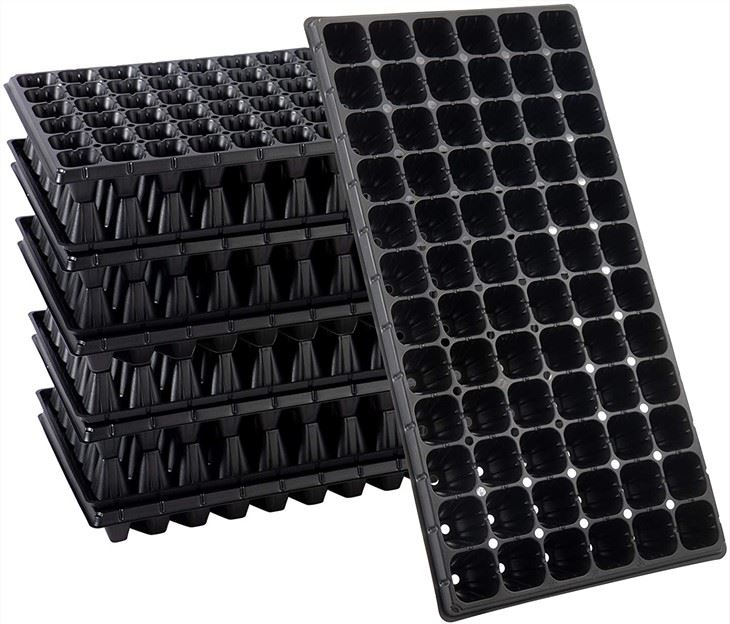
Let's talk about the different types of seed trays we offer. Our PP Plastic Seeding Tray is a popular choice. It's made of high - quality polypropylene plastic, which is durable and lightweight. These trays usually come with pre - drilled holes at the bottom. The holes are strategically placed to ensure even drainage across the entire tray.
If you're looking for a tray with multiple cells, our 72 Cell Seedling Tray is a great option. Each cell has its own set of holes, which allows for individual drainage. This is really useful if you're growing different types of seeds in the same tray. You can control the moisture level in each cell more effectively.
Now, if you have a seed tray without holes, don't worry. You can easily make your own holes. All you need is a small drill or a sharp object like a nail. Just make sure to make the holes big enough for water to drain through, but not so big that the soil falls out.
In addition to drainage, holes in the seed tray also help with temperature regulation. When water drains out, it takes away some of the heat from the soil. This can prevent the soil from getting too hot, which can be harmful to the seeds and seedlings. During hot weather, proper drainage can be the difference between success and failure in your seed - starting project.
Another benefit of having holes in the seed tray is that it allows for better nutrient distribution. As water drains through the soil, it carries nutrients with it. This helps to ensure that the nutrients are evenly distributed throughout the soil, so all the seeds get a fair share.
So, to answer the question "Do I need to put holes in the bottom of a seed tray?", the answer is generally yes. While there are some exceptions, most seeds will benefit from proper drainage. It helps to keep the roots healthy, reduces the risk of diseases, and promotes better growth.
If you're in the market for high - quality seed trays, we've got you covered. Our range of seed trays is designed to meet the needs of both amateur and professional gardeners. Whether you're starting a small herb garden on your windowsill or a large vegetable patch in your backyard, we have the right seed tray for you.
We're always happy to help you choose the best seed tray for your needs. If you have any questions or need more information, don't hesitate to reach out. We can discuss your specific requirements and offer personalized advice. Whether you're a seasoned gardener or just starting out, we're here to support you every step of the way.
Ready to take your gardening to the next level? Contact us to start a procurement discussion. We look forward to working with you and helping you achieve great results with your seeds.
References

- Smith, J. (2020). The Science of Seed Germination. Gardening Today Press.
- Green, A. (2019). Seed Starting Basics. Horticulture Journal Publications.